Throughout the small town of Medway, there are many buildings and references to past eras. Buildings like the old boot factory and the Jacob Ide house provide residents of Medway with insight into how their town developed economically and culturally. Street signs and memorials keep the influential figures of Medway alive, and documentation of Medway’s history allows residents to understand how modern Medway came to be. Sheila Dubrawski understands just how important preserving Medway’s History is, which is why she volunteered to be the President of the Medway Historical Society, a non-profit organization dedicated to making the history of Medway accessible to all residents. Established in 1902, the Society has been accepting donations of artifacts that tell the stories of people who have lived here and how the town has evolved over the years since its incorporation in 1713.
The Town of Medway Historical Commission primarily oversees the permitted demolition of historic properties, the creation of historic districts, and the sharing of historical images and information on historic signage in public spaces. It occasionally fundraises to support the operation of a modest museum building that allows us to accept artifacts, books, and images to share with the community. The Town of Medway, the Medway Historical Commission, and the Medway Historical Society are working to create a “Medway Town Museum” at the historic Jacob Ide House at 158 Main St. The museum is expected to be open in early 2026.
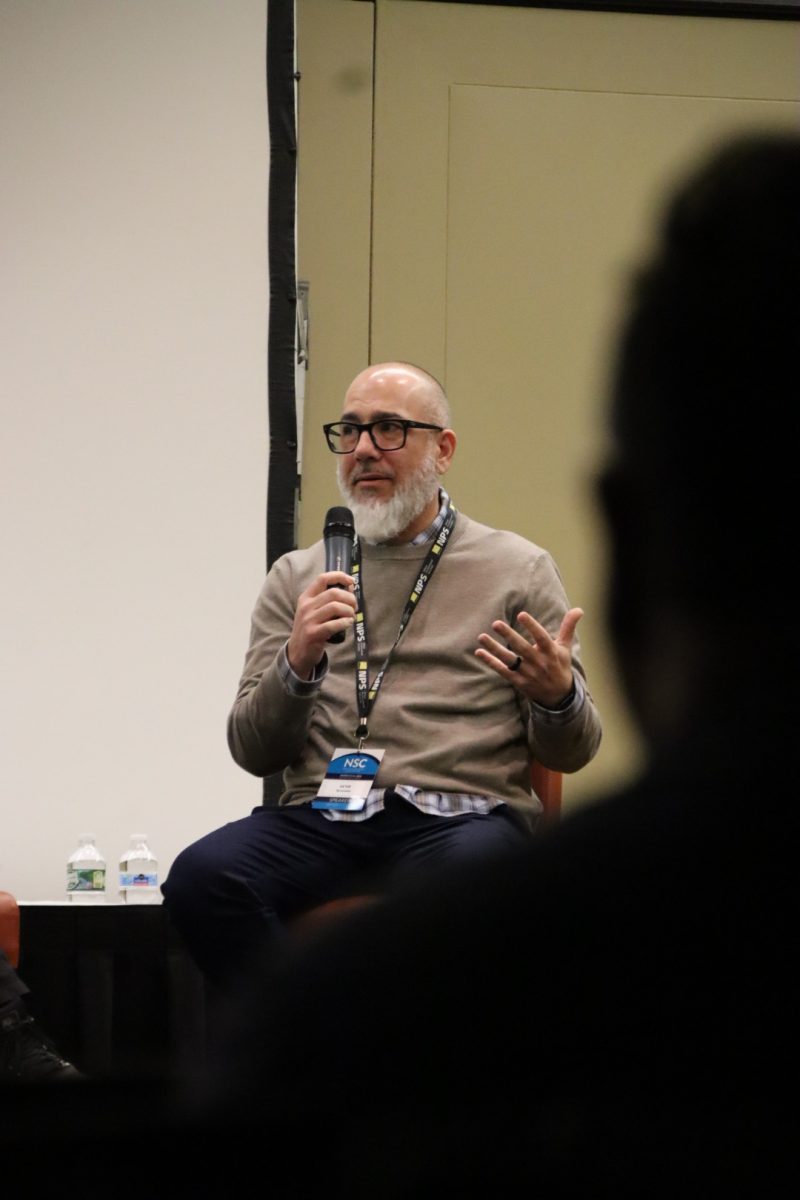
In a recent interview, Dubrawski answered essential questions about Medway’s history. Before Medway was a town, the territory of Medway was settled by the Nipmuc Indians, and their principal camp in this area was located at Mucksquit – the southern shore of Winthrop’s Pond – called Winnekeening Lake, meaning “smile of the great spirit” in North Medway. The pond is in Holliston but was originally part of Medway. The Charles River was called Quinobequin, meaning “winding waters.” The land and waters were a source of food and fur.
Furthermore, when early European settlers of Medway first arrived here, they needed to farm survive. Few town centers could provide all the necessities of life. The fertile land for raising and feeding animals, situated along the waterways to provide water and later water power, and trees for building houses, attracted settlers to move westward along the Charles River. Generally, settlers petitioned for a new town due to the hardship of traveling long distances to meet their religious obligations. It was very challenging to navigate the rugged pathways, especially in bad weather. To settle a town, a “learned gentleman” and a meeting house were required. These were the reverends and ministers. The original Town of Medway was what we now know as the Town of Millis. It was Incorporated in 1713. In 1749, the ‘west’ precinct was established. So until 1885, when Millis incorporated as a new town, Medway consisted of the east precinct and west precinct or East Medway and West Medway.
The first school was held in Peter Adams’ house (Millis). His wife was the first teacher. The settlers in the Old Grant (then Medway/now Millis) petitioned for several years for a new “west” precinct for the very reason that it was hard, nearly impossible for the settlers west of the Charles River to travel east over the Black Swamp (now the area of Tractor Supply) to meet their religious obligations. Finally, in 1749, the petition for the new precinct was granted. This was called the “New Grant” or the “West Precinct,” and it is what we now know as “Medway.”
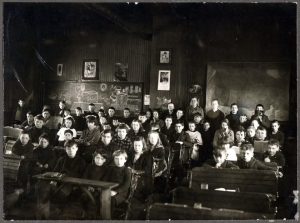
A meeting house was built at the current site of Learning Tree Nursery School at the corner of Evergreen and Main Street. That meeting house served the town until 1816, when the town grew and the Second Congregational Church (now Community Church) was built on “Rabbit Hill.” That was the new meeting house. It was not until 1871 that Milton H. and Edward S. Sanford give $7500, and citizens subscribed $8315 towards building a public hall. That was the first public Town Hall, named Sanford Hall. It burned in 1911 and was rebuilt in brick and still remains as our “Town Hall” today.
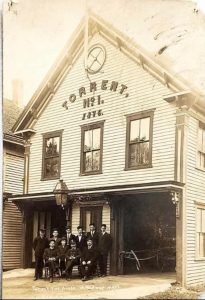
Incidentally, the transition from an agricultural town to a factory town was a notable shift for Medway. Main industries in Medway were boots, shoes, straw baskets, and hats. Some factories in which the manufacturing of these products took place are still standing today. Also, there used to be a water-powered mill in Medway, which burnt down in 1883.
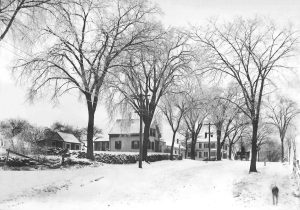
To many, it may come as a surprise that a few semi-famous people grew up in Medway. William T. Adams, whose pen name was Oliver Optic, was a semi-famous author from Medway who wrote books about the Civil War in favor of the Union and went on to become a Massachusetts state representative. John “Grizzly” Adams grew up in Medway and moved to California during the Gold Rush. After not being successful in finding any gold, he started trapping and training grizzly bears and other wildlife in a San Francisco museum.
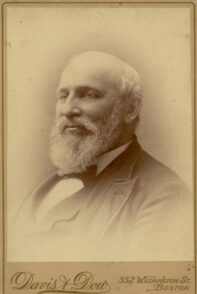
As our town continues to grow and change, Medway residents should know the history of their town and share it with the world. It has a long and storied history which we still see traces of. It is the responsibility of residents today to preserve that history and continue to support the efforts of the Medway Historical Society.